Uganda's oldest and largest national park covers 3,840 km² of savanna and woodland in the country's north-west, where the entire Victoria Nile is forced through a gorge just 8 metres wide. It's the country's flagship safari destination and its most visited park.
Uganda's oldest and largest national park protects 3,840 km² of savanna, palm-dotted woodland and riverine forest in the country's north-west, spread across the districts of Buliisa, Masindi, Kiryandongo and Nwoya. The Victoria Nile bisects the whole reserve, running east to west for about 115 km, and at its centre the full river is jammed through a rock fissure just 8 metres wide before plunging 45 metres into the Devil's Cauldron. That single drop ends an 80-km run of rapids. The water arrives angry and leaves calm, spreading into a broad, slow river for the final stretch to Lake Albert.
The park is Uganda's flagship savanna safari destination and its most visited. It holds 144 mammal species, 556 birds, and 51 each of reptiles and amphibians. Elephants, giraffes, buffalo, Uganda kob and lions work the northern plains, while the delta's papyrus swamps hide shoebill storks — prehistoric-looking birds that draw enthusiasts from around the world. The falls have a celebrity file too: Winston Churchill, Theodore Roosevelt and Ernest Hemingway all came, and in 1951 Humphrey Bogart and Katharine Hepburn filmed The African Queen on the park's Lake Albert and Nile stretches.
Three days is the standard visit. Dawn game drives on the Buligi tracks between the Nile and Lake Albert, a two-hour launch trip from Paraa to the base of the falls, a hike to the top where the ground trembles underfoot, and a delta cruise for the shoebills. Chimpanzee trekking in Budongo Forest adds a fourth day. Kampala is four to five hours away by road; a scheduled flight from Entebbe lands at the Pakuba airfield in about an hour.
Samuel and Florence Baker became the first Europeans to see the falls in 1864, and Samuel named them after Sir Roderick Murchison, a president of the Royal Geographical Society who had backed African exploration. The river had been known to local people long before. It ran through the Kingdom of Bunyoro, whose king Chwa II Kabalega fought British expansion for decades before his capture in 1899 ended the kingdom's independence. Florence Baker, travelling with her husband through territory no European woman had recorded, mapped stretches of the Nile basin on that same expedition.
In 1910 the colonial administration created the Bunyoro Game Reserve on the south bank of the Nile. Formal gazettement as a game reserve followed in 1926, and the boundaries were pushed north of the river in 1928. Uganda's National Parks Act of 1952 then established Murchison Falls National Park, one of the first in the country. By then the falls were already on the international map: Churchill had passed through in 1907 and coined the phrase that has sold Uganda ever since, and Roosevelt's 1909 safari stopped here on its way through East Africa.
The 1960s were the peak years. Murchison was Uganda's most visited park and among the best known in Africa, with an estimated 15,000 elephants on its plains and overland travelers arriving from across the continent. In 1972 Idi Amin's military government renamed it Kabalega National Park, swapping a British patron for the Bunyoro king the British had defeated. The official name eventually reverted to Murchison Falls. The decades of war and lawlessness that followed did far worse damage than any renaming — poaching stripped the plains, and elephant numbers collapsed.
Under the Uganda Wildlife Authority the wildlife has come back, and tourism with it; Murchison is again the country's most visited park. Twenty percent of every entry fee now goes to neighboring communities under Uganda's revenue-sharing policy, and a bridge across the Nile at Paraa, opened in 2021, has replaced the old vehicle ferry as the standard crossing. The ferry still runs occasionally, during bridge maintenance or exceptional water levels.
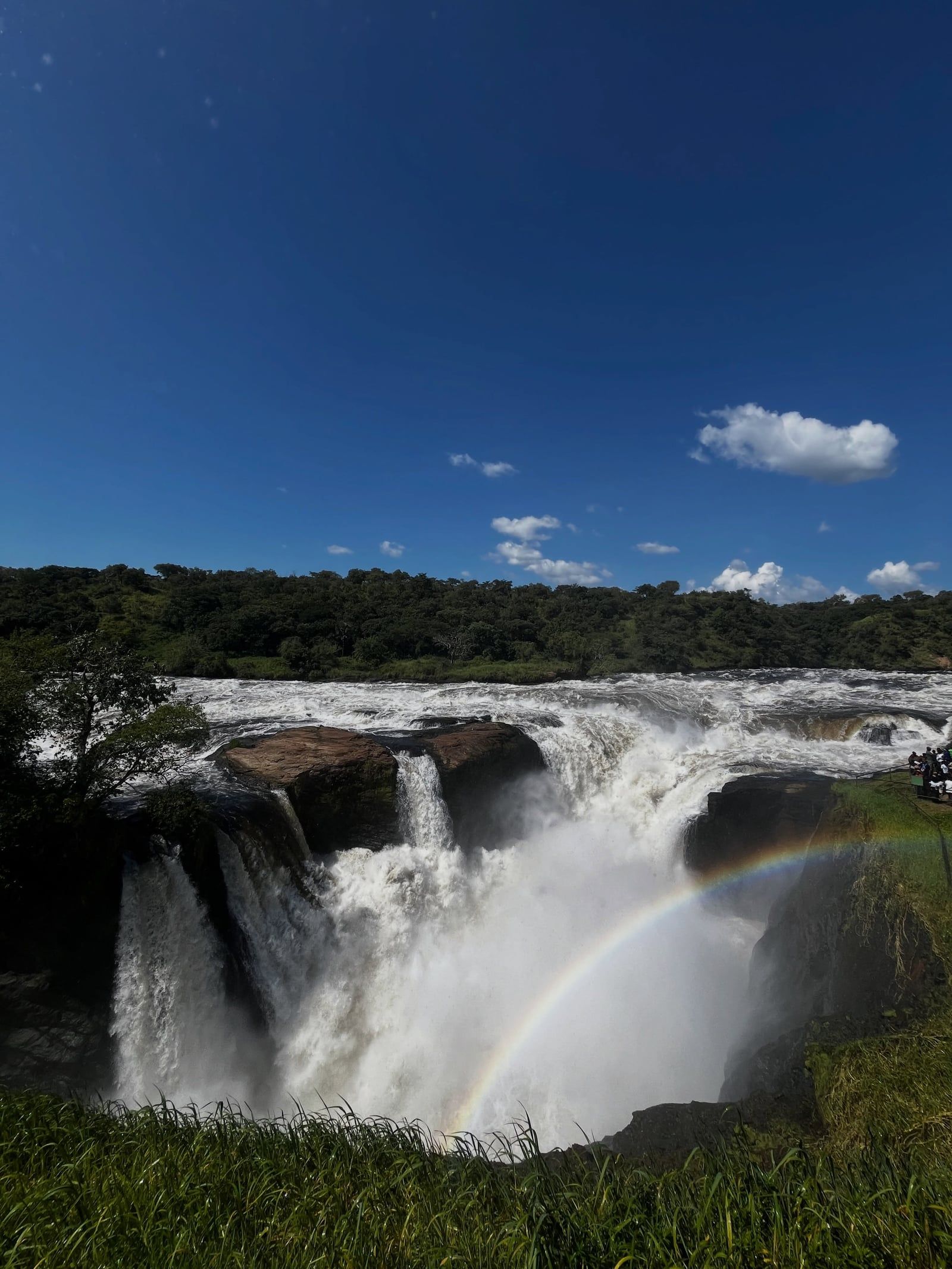
The waterfall is the engine of the park, and its mechanism is violent: the full flow of the Victoria Nile is forced through a fissure 8 metres wide — room for about four cars abreast — and then drops 45 metres into the Devil's Cauldron, a boiling pool whose spray hangs a permanent rainbow over Baker Point below. Upstream, the river arrives at the falls after 80 km of continuous rapids. Downstream, it widens into a calm, island-dotted channel. You hear the drop before you see it, and from the Top of the Falls viewpoint the rock shakes underfoot.
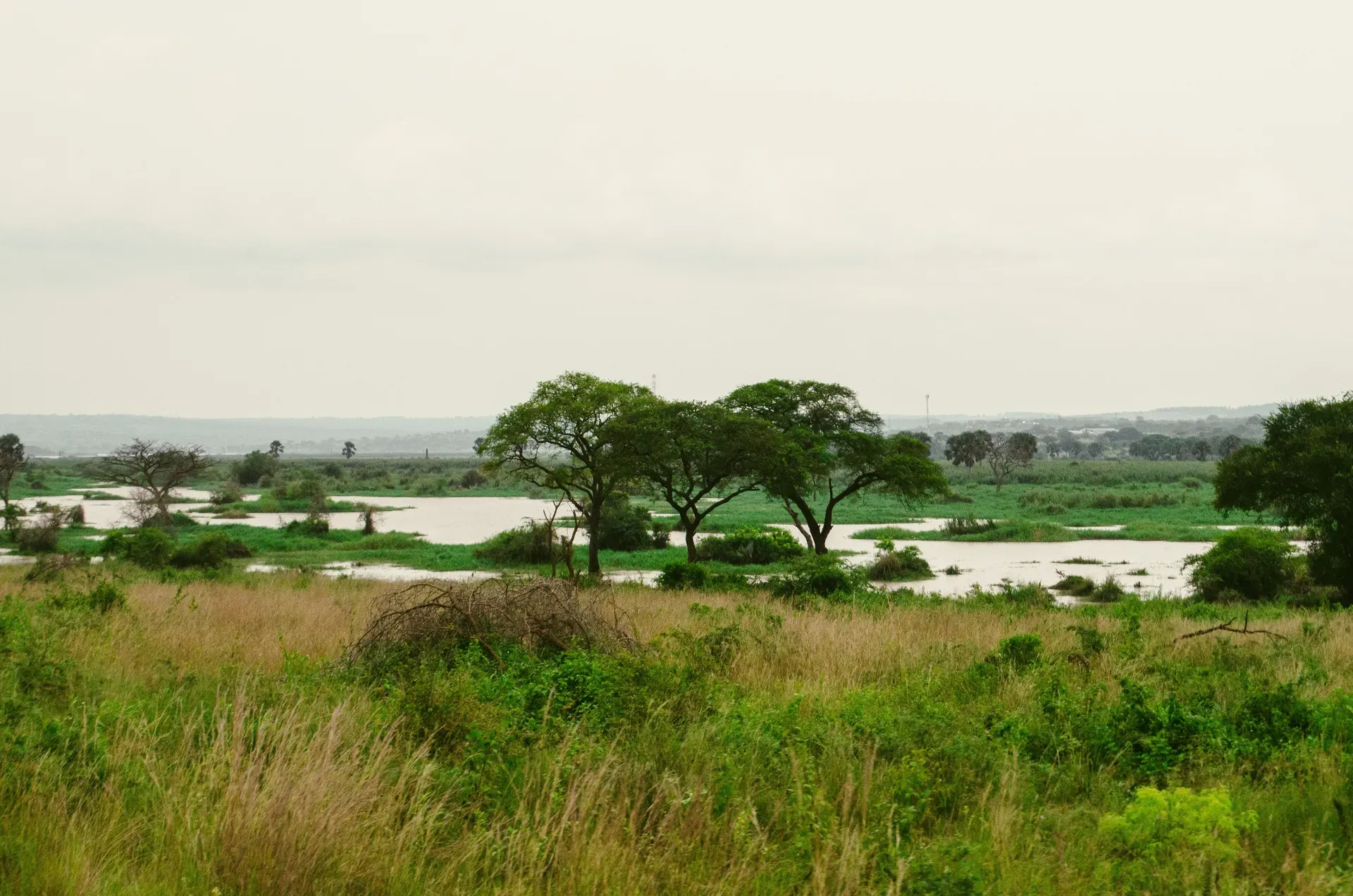
The park sits at the northern end of the Albertine Rift Valley, where the Bunyoro escarpment drops to rolling, palm-dotted plains. Altitude runs from 619 m at the Lake Albert delta, the lowest point in the conservation area, to 1,292 m on Rabongo Hill. North of the Nile the habitat is open savanna with Borassus palms and acacia woodland, and that's where the big-game viewing happens; the southern sector is denser woodland and forest patches. Add the adjoining Bugungu (501 km²) and Karuma (678 km²) wildlife reserves, and the wider Murchison Falls Conservation Area covers about 5,025 km².
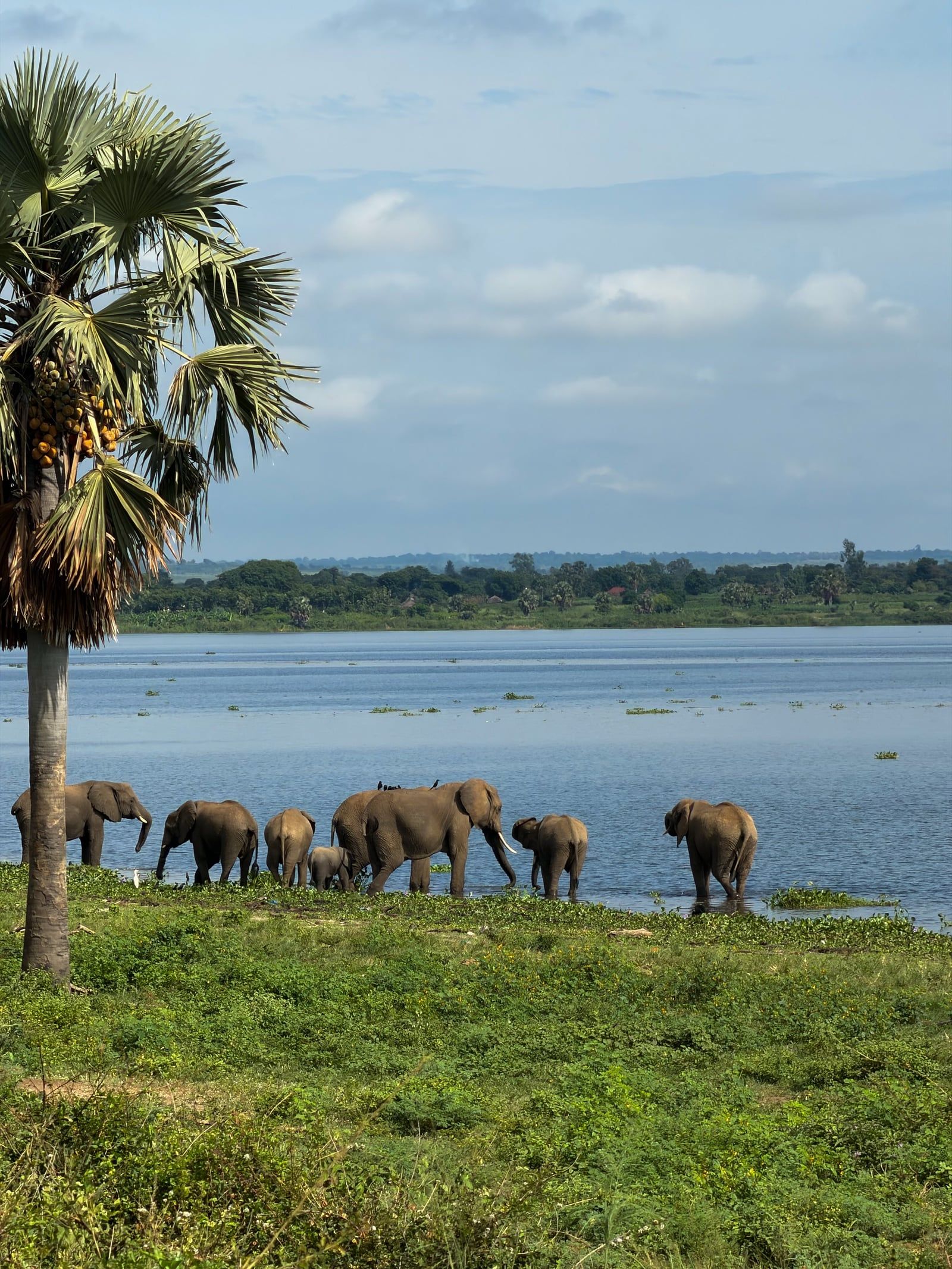
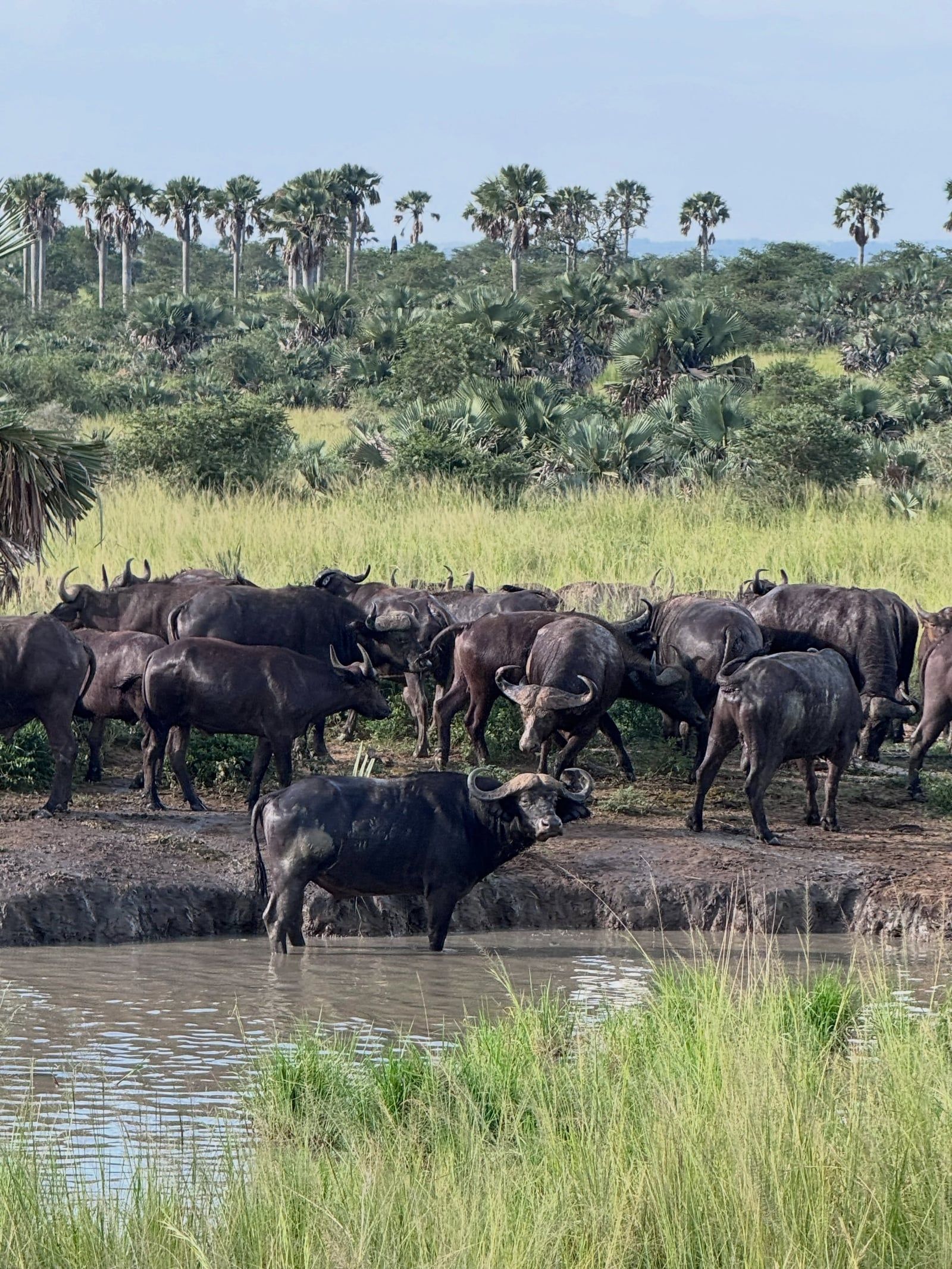
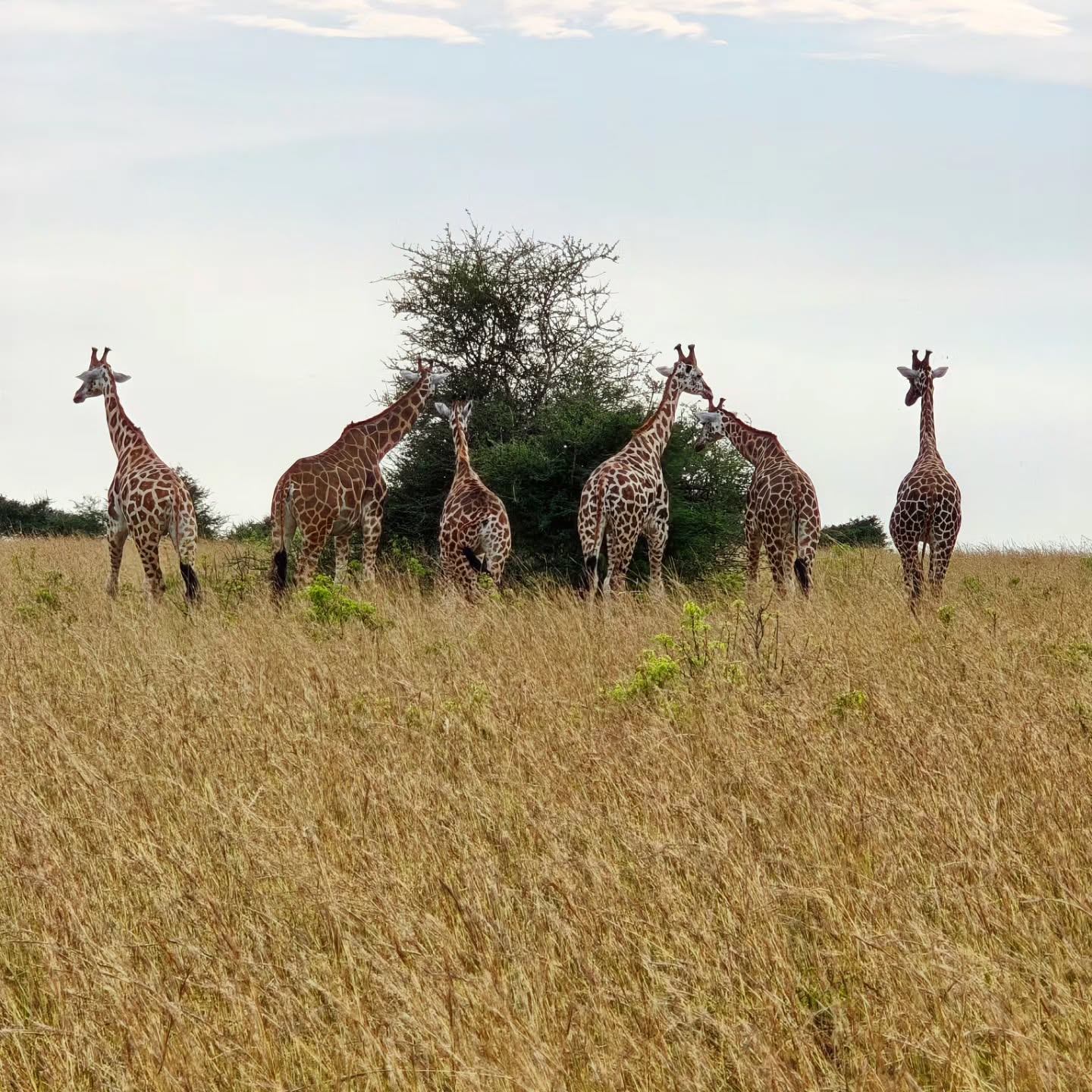
The species list runs long: 144 mammals, 556 birds, 51 reptiles and 51 amphibians. Giraffes have historically stayed in the northern sector, while elephants, buffalo, Uganda kob and lion prides concentrate on the Buligi Peninsula between the Nile and Lake Albert. In the river itself, hippos and Nile crocodiles crowd every sandbank — Paraa, the Luo name for the tourism hub at the crossing, means 'home of the hippo'. Farther downstream, the Albert Delta's papyrus swamps hold shoebills, Goliath herons and saddle-billed storks, and the Budongo Forest on the southern boundary carries more than 600 chimpanzees under a canopy of mahogany and ironwood.
Before it carried an English name, the falls belonged to Bunyoro. Chwa II Kabalega, the kingdom's king from 1870 to 1899, fought the British for most of his reign, and when Amin's government renamed the park Kabalega National Park in 1972 it was reclaiming that memory. The official name reverted to Murchison Falls, but the old one never fully died — many Ugandans, particularly in Bunyoro, still call the falls Kabalega Falls.
Famous visitors shaped how the world saw the place. Churchill passed through in 1907 and left calling Uganda the 'pearl of Africa'. Hemingway survived two plane crashes in as many days here in January 1954 while viewing the falls from the air. Three years earlier, Bogart and Hepburn had made The African Queen on the park's Lake Albert and Nile stretches, and you can still boat the same water on the Paraa launch trips.
For the communities around the park in Buliisa, Masindi, Kiryandongo and Nwoya, Murchison is the local economy. Twenty percent of every entry fee is shared with these districts under Uganda's revenue-sharing policy, and in October 2024 the Uganda Wildlife Authority held its first free 'Open Park Days' so Ugandans could visit their own park without paying.
Ernest Hemingway survived two plane crashes in two days in January 1954 while on a flying tour of the falls, sustaining injuries that reportedly troubled him for the rest of his life.
The 1951 film 'The African Queen', starring Humphrey Bogart and Katharine Hepburn, was shot on the park's Lake Albert and Nile stretches. Launch trips from Paraa still run the same water.
Paraa, the park's tourism hub at the Nile crossing, takes its name from the Luo word for 'home of the hippo' — and the riverbanks near it stay crowded with hippos and crocodiles.
In the 1960s the park held an estimated 15,000 elephants, making it among the best-known safari destinations in Africa. Decades of conflict and poaching later collapsed that number.
The spray from the 45-metre plunge into the Devil's Cauldron keeps a rainbow hanging over Baker Point, where the UWA launch boat stops directly beneath the falls.
The Albert Nile delta is one of Africa's most reliable places to see the shoebill stork, a grey, statue-still bird with a shoe-shaped bill that can stand over a metre tall.
Twenty percent of park entry fees are shared with neighboring communities under Uganda's revenue-sharing policy, and UWA piloted free 'Open Park Days' for Ugandans on 17–18 October 2024.
It's famous for the waterfall at its centre, where the entire Victoria Nile is forced through a gorge just 8 metres wide before plunging 45 metres into the Devil's Cauldron — one of the most powerful waterfalls in Africa. The park is also Uganda's oldest and largest, at 3,840 km², and its flagship savanna safari destination, with 144 mammal species and 556 bird species.
Samuel and Florence Baker, the first Europeans to see the falls in 1864, named them after Sir Roderick Murchison, a president of the Royal Geographical Society. In 1972 Idi Amin's government renamed the park Kabalega National Park after the Bunyoro king; the official name later reverted, though many Ugandans still call the falls Kabalega Falls.
The park itself covers 3,840 km² across the districts of Buliisa, Masindi, Kiryandongo and Nwoya in north-west Uganda. Together with the adjoining Bugungu (501 km²) and Karuma (678 km²) wildlife reserves, the wider Murchison Falls Conservation Area covers about 5,025 km².
Under the UWA tariff running July 2024 to June 2026, foreign non-resident adults pay US$45, foreign residents US$35, and East African citizens UGX 25,000. Children aged 5–15 pay reduced rates (US$25 for foreign non-residents) and under-5s enter free. A day ticket is valid 24 hours from entry, and activities like the launch cruise (US$30) are paid separately.
Gates are open 7:00 AM to 7:00 PM daily, and UWA states there are no exceptions to these hours. Time your drives so you're out before 7:00 PM — late arrivals can mean penalties or a night at the gate. Launch trips run in daylight windows, commonly around 8–9 AM and 2–3 PM.
The park is 305 km north of Kampala; driving to the southern entrance via Masindi and the Kichumbanyobo gate takes 4–5 hours. Most people break the trip at Ziwa Rhino Sanctuary, which sits on the same surfaced road. Scheduled and charter flights from Entebbe or Kajjansi reach the Pakuba, Chobe or Bugungu airfields in about an hour.
The dry seasons of June–September and December–February are best: tracks stay passable, vegetation is thinner, and wildlife concentrates near the Nile and waterholes. January and February get hot (29–34°C). April, May, October and November are the wettest months, when murram roads turn muddy and the top-of-the-falls rocks get slippery — though birding is good and lodges are quieter.
Four of the five, yes: lions, leopards, elephants and buffalo are all present, with the northern Buligi sector the prime viewing ground. Rhinos were wiped out in Uganda, but you can track white rhinos on foot at Ziwa Rhino Sanctuary, roughly midway between Kampala and the park, to complete the set.
Three days covers it well: game drives on the Buligi tracks, the launch trip to the bottom of the falls, the Top of the Falls viewpoint, and an Albert Delta cruise. Two days handles the core highlights if you're short on time. Add a fourth for chimpanzee trekking in Budongo's Kaniyo Pabidi block or serious birding.
Since the Paraa bridge opened in 2021, the bridge is the normal way across the Victoria Nile, and the vehicle ferry runs only during bridge maintenance or exceptional water levels. When in service, the ferry operates 7:00 AM–7:00 PM on scheduled crossings roughly every 1–2 hours, carrying up to 8 vehicles at UGX 20,000 per light vehicle one way.
Browse verified tours with free cancellation and instant confirmation.
Find Tours