These 3-day tours pack in Murchison Falls' highlights: game drives across the savannah, a boat cruise on the Victoria Nile to the base of the falls, and rhino tracking at Ziwa Rhino Sanctuary. Options range from group safaris to fully private trips with your own vehicle and driver-guide.
 Free Cancellation
Three-day private driving safari with meals, accommodation, and pickup anywhere within 30km of the airport.
 Free Cancellation
3-day safari with a game drive, Victoria Nile boat cruise, top-of-the-falls visit, and rhino trekking at Ziwa Sanctuary.
 Free Cancellation
3-day guided safari with game drives, a Nile boat cruise, hikes, and rhino tracking on foot.
 Free Cancellation
Half-day guided walk hitting Kampala's Independence Monument, National Mosque, Nakasero Market, Kasubi Tombs and Kabaka's Palace.
 Free Cancellation
Three-day guided safari from Entebbe with game drives, boat cruise, and rhino tracking included.
 Free Cancellation
Private 3-day safari to Murchison Falls with Big Five game drives and all meals included, north of Kampala.
 Free Cancellation
Three-day private safari with game drives, a boat cruise to the falls, and a hike to the top.
 Free Cancellation
3-day guided safari with game drives, a Nile boat cruise to the falls, meals and lodging included.
 Free Cancellation
3-day private 4x4 safari with two game drives, a Nile boat trip, a falls hike, and rhino tracking at Ziwa.
Read what travelers share about their experience visiting Murchison Falls National Park — from practical tips to personal highlights.
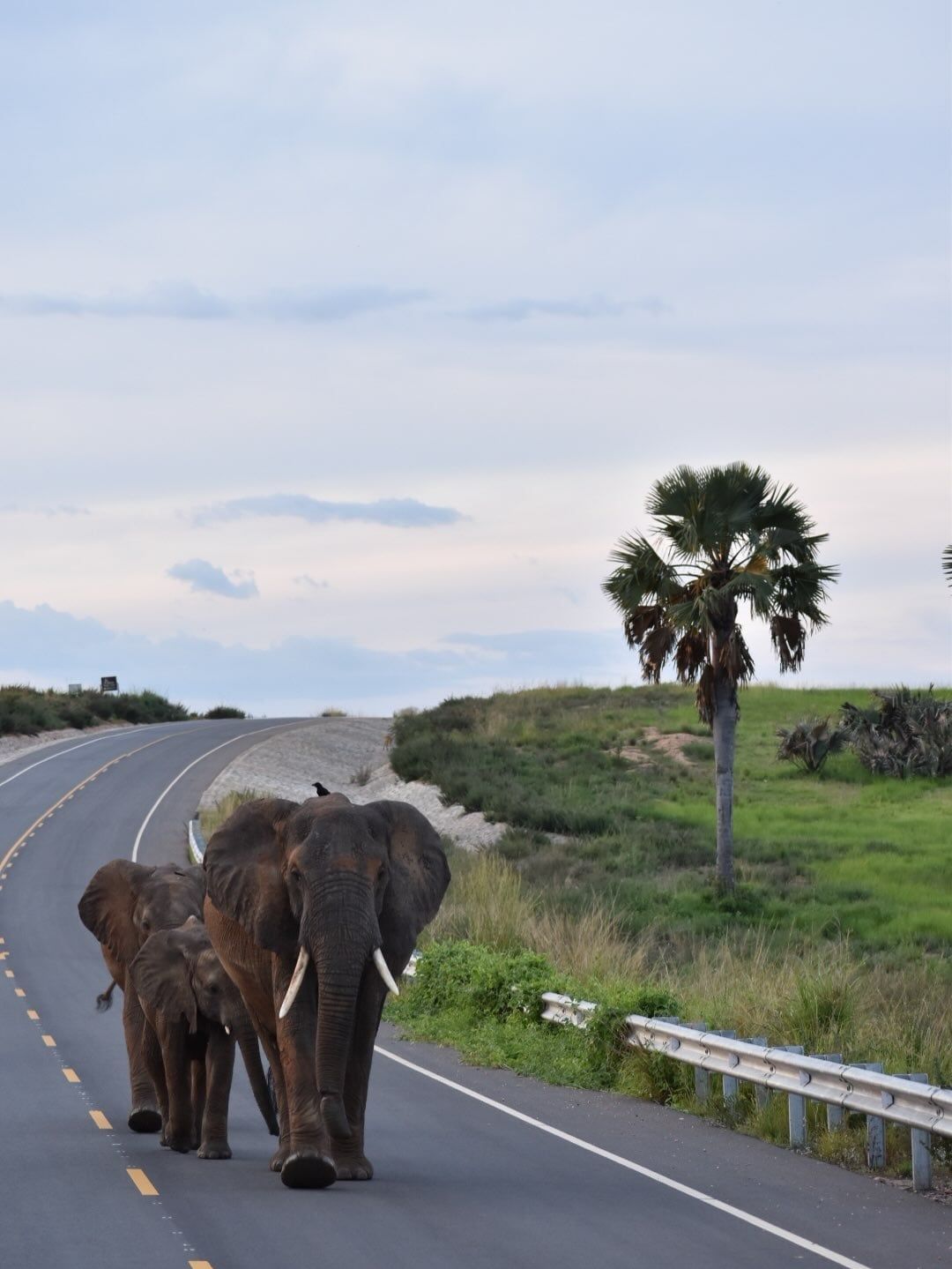
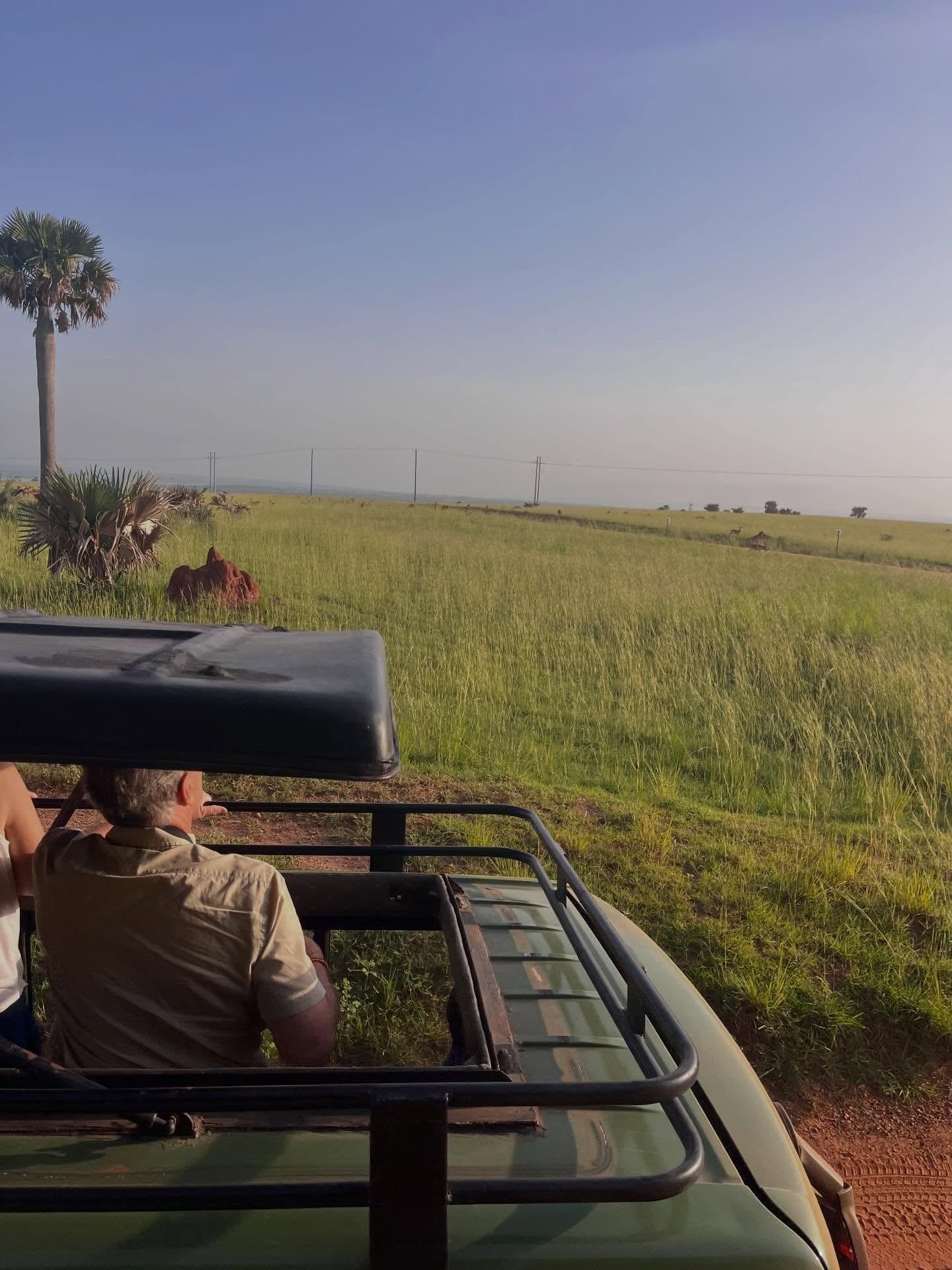
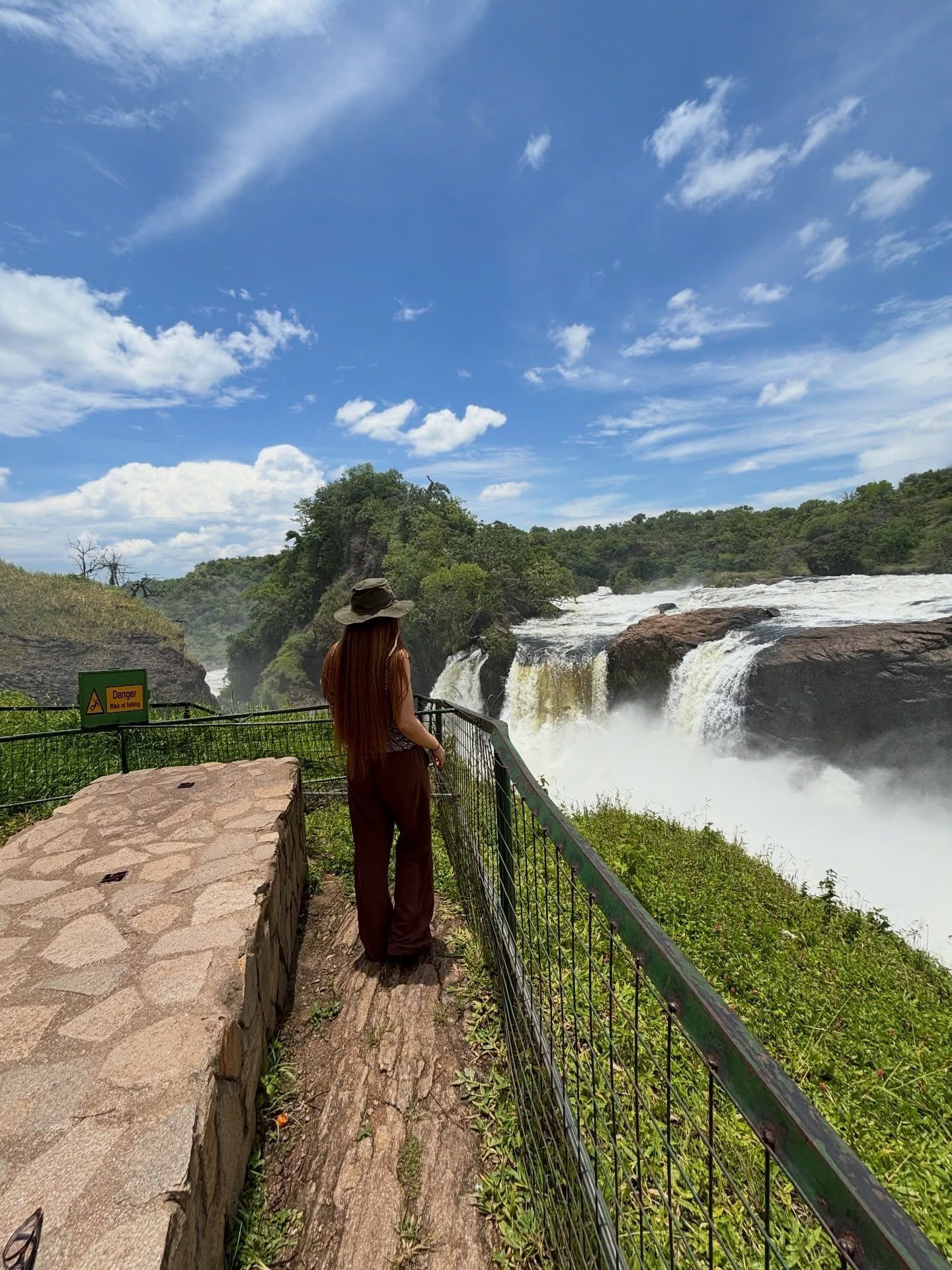
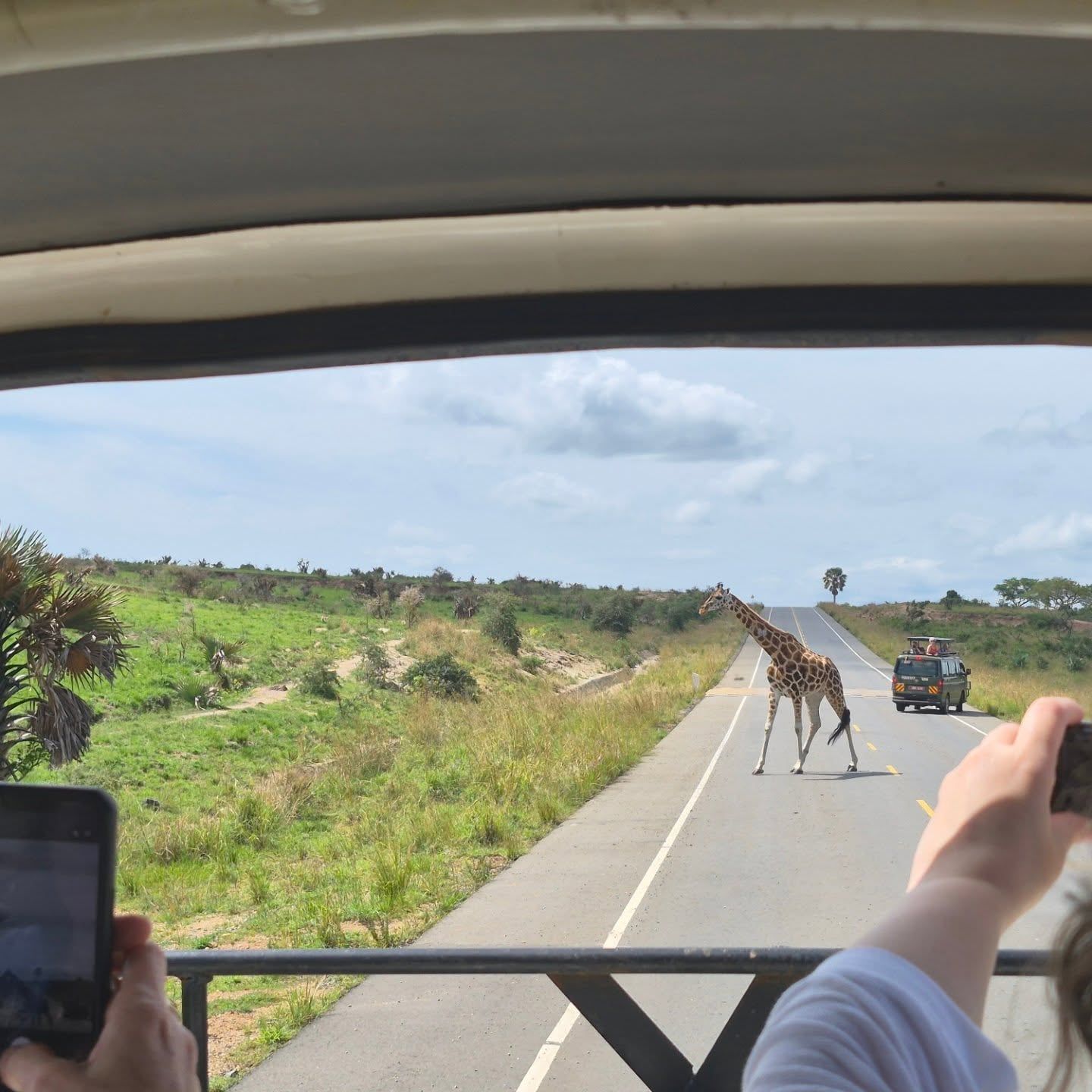
Three days is the sweet spot for Murchison Falls: enough for game drives on the Buligi tracks, the launch cruise to the base of the falls, the Top of the Falls viewpoint, and a delta excursion. Most tours run 72 hours door-to-door from Kampala or Entebbe, with a driver-guide, a 4x4, and two nights of lodging included. The 305 km drive up is usually broken at Ziwa Rhino Sanctuary, so you arrive on day one having already tracked rhinos on foot.
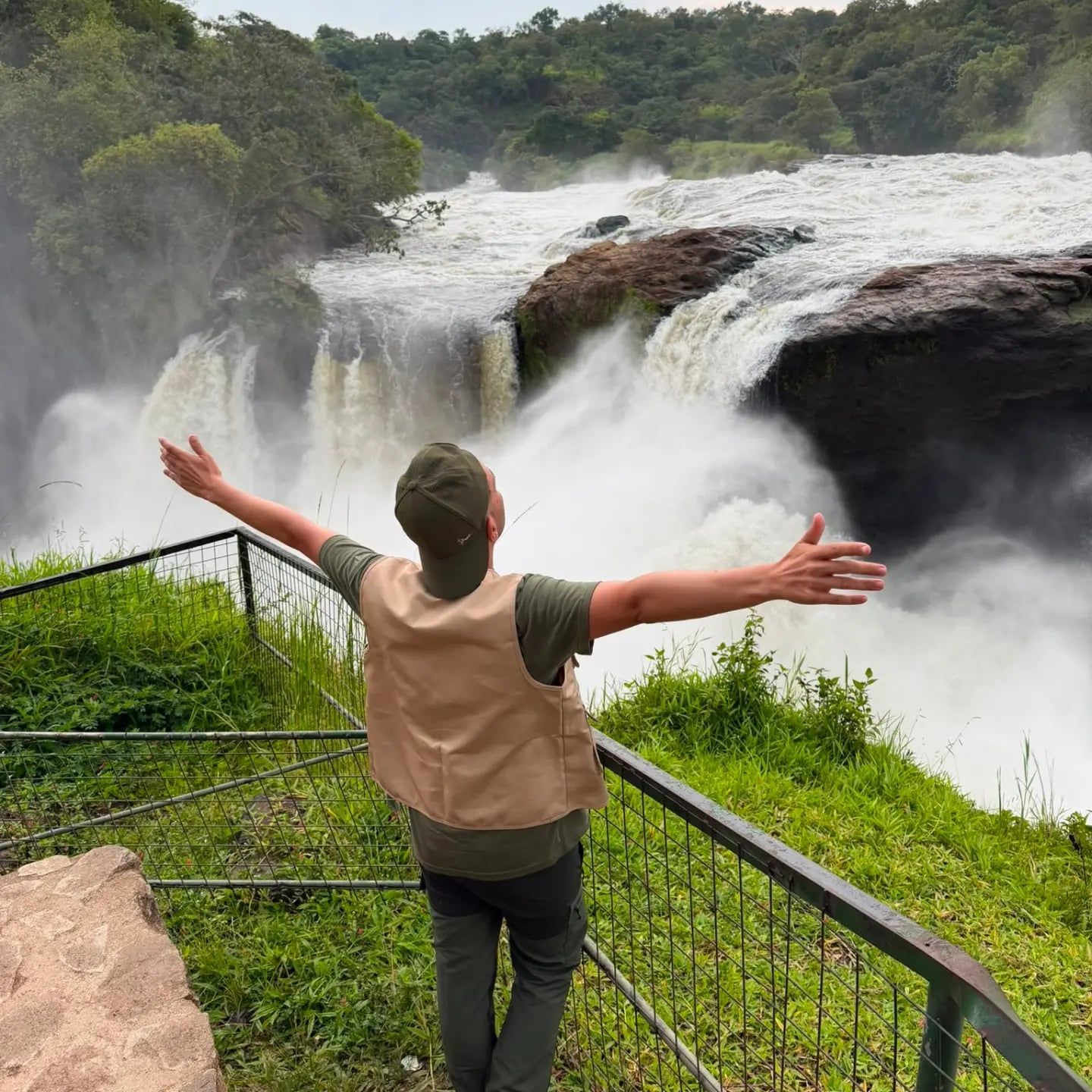
The UWA launch boat runs about 2 hours up the Victoria Nile from Paraa, past hippos, Nile crocodiles and buffalo bathing at the water's edge. It stops at Baker Point, directly beneath the spot where the entire river squeezes through an 8-metre gorge and drops 45 metres into the 'Devil's Cauldron'. The spray holds a permanent rainbow.
From Baker Point you can hike about 45 minutes up to the viewpoint, where the ground trembles as the Nile funnels through the fissure. Prefer not to climb? Drive there instead. Either way, wear grippy shoes — the rocks are wet and slippery, and people have died taking selfies near the edge.
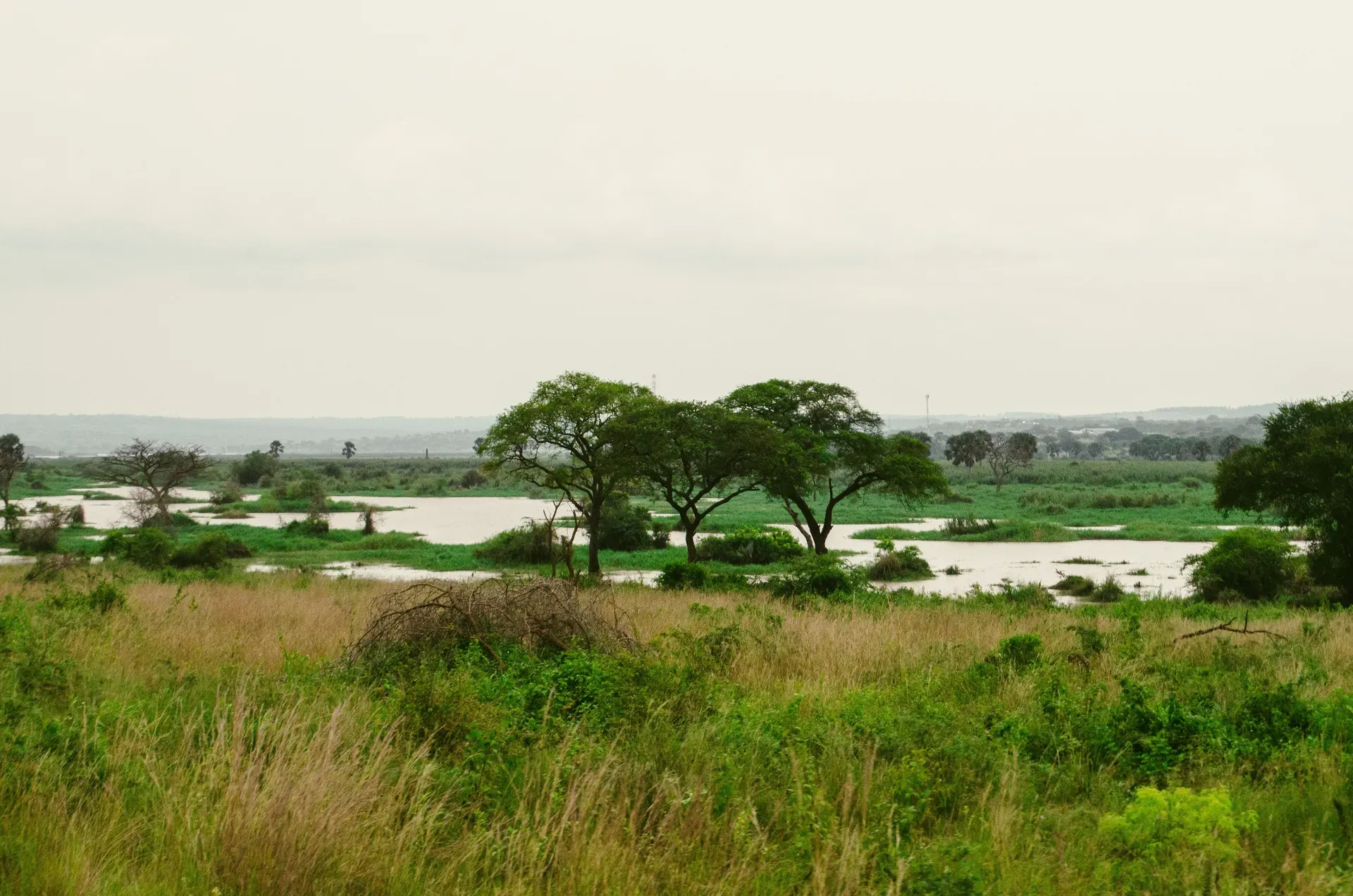
The Buligi Peninsula between the Nile and Lake Albert is the park's best game country. Elephants, giraffes, buffalo, Uganda kob and lion prides come out at dawn and late afternoon, so good itineraries schedule two drives across the three days. The northern savanna, dotted with Borassus palms, is where most sightings happen.
Nearly every 3-day tour stops at Ziwa Rhino Sanctuary, halfway between Kampala and the park on the surfaced Masindi road. You walk with armed rangers to within metres of white rhinos. It's the only way to complete Uganda's Big Five on this route, since rhinos no longer live inside the park itself.
Paraa — 'home of the hippo' in Luo — is the tourism hub where most lodges cluster. A bridge has carried traffic across the Nile here since 2021; the old vehicle ferry runs only during bridge maintenance or exceptional water levels. Hippos and crocodiles crowd the banks nearby.
Some itineraries add a 2-hour downstream cruise toward the Albert Nile Delta, Africa's most reliable place to spot the shoebill stork. Goliath herons and saddle-billed storks work the papyrus swamps along the way. If the shoebill is on your list, confirm the delta cruise is in your tour before booking.
Prices for 3-day Murchison tours on Viator run from about US$200 to US$1,200, and what's bundled varies enormously. Read the inclusions list before comparing numbers.
Almost every option is a guided, private safari with your own 4x4 and driver-guide — 72 hours, two nights, all meals on most. One budget listing at US$200 covers Kampala city stops with only fees and taxes included, excluding transport and lunch. That one isn't a real park safari; skip it if your goal is wildlife.
The US$979 Big Five tour bundles park entry, the boat cruise, rhino tracking, all meals and lodging inside the park. The US$970 private option includes meals but not entry fees — those add up fast (US$45 per adult per day, plus US$150 for a tour-company 4x4). The US$770 private safari covers entry for vehicle, driver and guests, plus an armed UWA ranger on game drives. That's the most complete package on paper.
Entrance costs US$45 for foreign non-resident adults, US$35 for foreign residents, UGX 25,000 for East African citizens; children 5–15 pay US$25 and under-5s enter free. Activity fees are separate if not bundled: the launch cruise is US$30, the Top of the Falls hike US$15, and the viewpoint US$10. A day ticket is valid 24 hours from entry — extra hours are charged as an extra day.
June–September is the park's busiest window, and December–February nearly as tight, so reserve lodges and tours early for those months. All Viator tours here allow free cancellation up to 24 hours before departure. Chimp permits in Budongo must be arranged in advance if you want a fourth-day add-on.
Most operators pick up anywhere in Kampala, or from Entebbe Airport within about 30 km. Guides work in English on all tours; German, French, Spanish and Italian appear on several. Drivers typically call or message the day before to fix your pickup point — one operator defaults to the Sheraton Kampala parking lot if you can't give an address.
Several tours list wheelchair-accessible transport and surfaces, and the boat cruise requires no walking — life jackets are provided. But the park itself has no formal accessible trail infrastructure, and game-drive tracks are rough dirt. Arrange any assistance with your operator before arrival rather than assuming.
The standard itinerary suits most fitness levels; the only real effort is the optional 45-minute falls hike. Malaria risk is high here and tsetse flies are present — pack khaki and olive clothing, not black or dark blue, plus repellent. Three operators flag against the tour for spinal injuries, pregnancy or poor cardiovascular health.
Swipe to see more
| Budget group-style safari | Mid-range private tour | Activity-packed private safari | Big Five focused safari | Premium guided safari | |
|---|---|---|---|---|---|
| Price from | US$700 | US$820 | US$770 | US$979 | US$1,200 |
| Duration | 72 hours | 72 hours | 72 hours | 72 hours | 72 hours |
| Best for | Travelers wanting the four standard draws on one ticket | Families and solo travelers who want their own vehicle and pace | First-time visitors who want everything pre-paid | Big Five completers — rhino tracking is uncommon on short itineraries | Comfort-focused travelers wanting air conditioning and a professional guide |
| Includes | Meals, transport, accommodation, park fees and activity tickets | Private transport, all meals, accommodation; no WiFi on board | 4x4 pop-up roof, armed UWA ranger, park entry for car and guide, rhino tracking, boat safari, Top of Falls hike, 2 nights and all meals | Park entry, boat cruise fee, rhino tracking, all meals, guide, lodging inside the park | Entrance fees, game drives, boat cruise, air-conditioned vehicle, all meals, accommodation |
| Rating | 4.3 (9 reviews) | 5.0 (9 reviews) | New listing, no reviews yet | 5.0 (2 reviews) | New listing, no reviews yet |
Swipe to see more
Gates open 7:00 AM to 7:00 PM daily, and UWA states there are no exceptions to these hours. Plan every drive and crossing so you're out before 7:00 PM — motors who miss it face penalties.
Launch trips run in daylight windows, commonly around 8–9 AM and 2–3 PM. Book the morning departure if you want softer light for photographing animals on the banks.
The Paraa bridge (open since 2021) is the normal Nile crossing. When the old vehicle ferry runs — bridge maintenance or exceptional water levels — it operates 7:00 AM–7:00 PM on scheduled crossings at roughly 07:00, 09:00, 11:00, 12:00, 14:00, 16:00, 18:00 and 19:00, carrying a maximum of 8 vehicles per trip.
A day ticket is valid 24 hours from entry; anything longer is charged as an extra day.
By road from Kampala it's 305 km (190 mi), 4–5 hours to the southern entrance via Luweero, Nakasongola and Masindi, entering at the Kichumbanyobo gate. Paraa is another 85 km past Masindi. Most 3-day tours break the drive at Ziwa Rhino Sanctuary, which sits on the same surfaced road.
By air, AeroLink Uganda flies Entebbe to the park's Pakuba, Chobe or Bugungu airfields in about an hour, typically departing around midday. Charters from Entebbe or Kajjansi cost about US$284 per adult one way. Pakuba is closest to the Paraa lodge cluster.
Public transport costs about UGX 20,000 Kampala–Masindi, then you hire a private car for the last 85 km — allow a full day. Private airport transfers from Entebbe run US$164–514 depending on vehicle class. Coming from Fort Portal (280 km, 6+ hours) suits travelers combining Murchison with Kibale or Queen Elizabeth.
Vehicle entry is separate from personal entry: US$40 for a foreign-registered saloon car (plus a US$10 MFNP surcharge), or US$150 for tour-company 4WDs.
June–September and December–February are the two prime windows. Tracks stay passable, vegetation thins out, and wildlife concentrates along the Nile and at waterholes, which makes spotting far easier.
June–September is the busiest stretch; December–February is equally productive but January and February run hot, around 29–34°C. Reserve lodges and tours early for both.
April, May, October and November are the wet peaks. Murram roads turn to mud, the top-of-the-falls rocks get slippery, and animals disperse into thick cover. The payoffs are green scenery, good birding and lower lodge rates — fine if you're flexible and patient.
Wildlife is most active at dawn and dusk regardless of month, so keep game drives early morning and late afternoon.
Game drives and the roughly 2-hour Nile launch cruise are the practical choices — neither requires walking, and life jackets are provided on the boat. The cruise works well for wheelchair users and seniors alike.
There is no formal wheelchair-accessible trail infrastructure in the park, and game-viewing tracks are rough dirt roads. Some lodges near Paraa have wheelchair-friendly rooms; arrange an accessible vehicle and assistance with your lodge or operator in advance.
The Top of the Falls hike climbs steeply for about 45 minutes from Baker Point and needs moderate fitness. Elderly visitors can drive to the Top of the Falls viewpoint instead and skip the trail entirely.
Children 5–15 pay reduced entry (US$25 for foreign non-residents) and under-5s enter free. Chimp tracking has a minimum age of 12. Keep children well back from the wet rocks at the falls and away from the water's edge — hippos and crocodiles are present.
Paraa, on the south bank, is the tourism hub: most lodges cluster about 5 km west of the crossing, and it's the departure point for launch trips. Lodging inside the park features on several 3-day tours, including the US$979 Big Five package.
UWA runs a reservations office at the gates, where you can pay entrance and activity fees via mobile money (Airtel Money/MTN MoMo), POS machines, bank transfer or the online portal. Keep every receipt — officials verify them.
Camping and campfires are allowed only at designated sites. Medical facilities are far away once you're inside the park, so bring a basic first-aid kit.
There's no WiFi on board at least one tour vehicle, and connectivity inside the park is limited generally. Download maps and confirm pickup details before you leave Kampala.
The speed limit inside the park is 40 km/h, enforced with immediate fines. Transit vehicles may not stop unnecessarily, and leaving the designated Kichumbanyobo–Tangi road is treated as entry without a valid permit.
Prohibited: firearms, pets, drones without UWA permits, littering, feeding animals, hooting, and picking vegetation. Flash photography is banned near primates; commercial filming needs special authorization. Camp only at designated sites.
Dress code is informal, but wear khaki, beige or olive — black and dark blue attract biting tsetse flies. Long sleeves, trousers, closed shoes and a hat are standard; bring a fleece for cold dawn drives in open vehicles.
Stay in your vehicle near hippos, buffalo and elephants, and photograph only from the vehicle or designated viewpoints. Night drives are restricted to guests sleeping inside the park and require a mandatory UWA guide (US$40 per person). You may be asked to show ID confirming resident status at the gate.
Viator listings run from about US$700 to US$1,200 per person, with most clustered between US$770 and US$980. The price differences come down to inclusions: the US$979 Big Five tour covers park entry, boat cruise, rhino tracking, meals and lodging, while cheaper options leave the US$45-per-day entrance fee and US$30 cruise fee for you to pay. Do the math on fees before assuming the cheapest tour is cheapest overall.
Some do, some don't. The US$979 Big Five safari and the US$770 private safari both list park entry in their inclusions; the US$970 private tour and the US$820 private tour include meals and accommodation but not entry. Adult entry is US$45 per day for foreign non-residents, and tour-company 4x4s pay US$150 vehicle entry — so an unbundled three days adds roughly US$135 per person in gate fees alone.
Yes, if your itinerary includes Ziwa Rhino Sanctuary. Lions, leopards, elephants and buffalo all live in the park — the Buligi sector is prime territory for them — but rhinos do not. Most tours stop at Ziwa, roughly halfway between Kampala and the park, where you track white rhinos on foot with rangers. That combination is how you complete the Big Five in three days.
Day one is the 4–5 hour drive from Kampala or Entebbe, usually broken with rhino tracking at Ziwa, arriving at your lodge near Paraa. Day two is the fullest: an early game drive on the Buligi tracks, then the 2-hour afternoon launch cruise to the base of the falls. Day three typically adds the Top of the Falls viewpoint or a second game drive before the drive back to Kampala.
Most 3-day packages include it — the US$979, US$900 and US$770 tours all list the Nile boat cruise in their inclusions. If yours doesn't, the UWA launch trip costs US$30 for foreign non-residents and takes about 2 hours, with a maximum of 45 passengers. Boats depart in daylight windows, usually around 8–9 AM and 2–3 PM.
Book two to three months ahead for June–September, the park's busiest window, and nearly as early for December–February. All the Viator tours here offer a full refund if you cancel at least 24 hours before departure, so there's little risk in locking in early. If you want chimpanzee tracking in Budongo added, that permit must be arranged in advance regardless of season.
Khaki, beige or olive long sleeves and trousers — black and dark blue attract tsetse flies, and their bites hurt. Add closed shoes with grip (the falls rocks are wet and slippery), a wide-brimmed hat, a fleece for cold dawn drives in open 4x4s, DEET repellent and a first-aid kit. Malaria prophylaxis is essential; mosquito density here is high. One operator even accommodates vegetarian, vegan and gluten-free diets if told in advance.
Largely yes. Children 5–15 pay reduced entry (US$25) and under-5s enter free, several tours offer infant seats, and the core activities — game drives and the boat cruise — involve no strenuous walking. The only optional effort is the 45-minute Top of the Falls hike; anyone who'd rather not climb can drive to the viewpoint instead. Keep children away from the falls rocks and the water's edge, where hippos and crocodiles are present.
Most operators pick up anywhere in Kampala or from Entebbe Airport (one allows any point within 30 km of the airport; another defaults to the Sheraton Kampala parking lot if you can't give an address). Drivers typically contact you the day before. English guides operate on every tour; several also offer German, French, Spanish or Italian.
June–September and December–February, the dry seasons. Tracks stay passable, vegetation thins, and wildlife concentrates around the Nile and waterholes, which makes game drives far more productive. Avoid April, May, October and November if you can — heavy rain turns the murram roads to mud and the falls rocks get treacherous. January and February are productive but hot, hitting 29–34°C.
Browse verified tours with free cancellation and instant confirmation.
Find Tours


This is a 72-hour private tour built around your own vehicle and driver-guide, with no other travelers joining your group. Transport, all meals (breakfast, lunch, dinner), and accommodation for the three days are included in the price. You cover gratuities yourself, and there's no WiFi on board — plan for stretches offline. Pickup is flexible: you can name your own point as long as it sits within 30km of the airport. Guides work in English, German, French, or Spanish, so you can request the language you're most comfortable in. Cancellations get a full refund if made at least 24 hours before departure. Anything inside that window doesn't qualify.
For a full refund, cancel at least 24 hours before the scheduled departure time.
German, English, French, Spanish


Three days covering the four standard Murchison draws: a game drive, a boat cruise on the Victoria Nile, a visit to the top of the falls, and rhino trekking at Ziwa Rhino Sanctuary, which sits on the Kampala-Gulu highway en route to the park. The operator, Enchanted Uganda Safaris, is based in Fort Portal City and runs this trip from there. Pickup is available in Kampala, Fort Portal, Entebbe, Kasese, Kisoro, and Masindi, so you can start from a hotel or bus terminal. Guides work in English, German, or Spanish. The price covers meals (including dinner), transport, accommodation, park fees, and activity tickets. Cancel at least 24 hours before departure for a full refund.
For a full refund, cancel at least 24 hours before the scheduled departure time.
German, English, Spanish


This 3-day safari runs with a guide in English or French and covers two game drives, a boat cruise on the Nile to the base of the falls, guided hikes, and rhino tracking on foot. Expect the big five here: lions, elephants, buffaloes, leopards, and rhinos. Two nights of accommodation are included, and transport between stops is provided. All meals are covered — breakfast, lunch, and dinner for the full trip. Pickup is from the parking lot, where you'll find the vehicle marked with the operator's stickers and tire covers. Cancel at least 24 hours before departure for a full refund.
For a full refund, cancel at least 24 hours before the scheduled departure time.
English, French


The itinerary runs to five stops, most of them in central Kampala: 30 minutes at the Independence Monument (a 6-meter structure marking Uganda's independence), an hour at the Uganda National Mosque with its climbable minaret, 30 minutes at Nakasero Market for fresh produce, then an hour each at the Kasubi Tombs — a UNESCO World Heritage site holding four Buganda kings — and Kabaka's Palace (Lubiri) in Mengo, built in 1885. Total stop time is about 4 hours, plus travel between them. All fees and taxes are included; lunch and private transportation are not, so budget for both. The guide speaks English. Tickets can be delivered to you at each sight via WhatsApp or email. Cancel at least 24 hours before departure for a full refund. One note: the listing is titled as a 3-day Murchison Falls safari, but the itinerary supplied covers only the Kampala city stops above. Confirm the full schedule with the operator before booking if the safari days matter to you.
For a full refund, cancel at least 24 hours before the scheduled departure time.
English


A 72-hour guided safari out of Entebbe, built around the park's game drives and a boat cruise to the falls. Rhino tracking is part of the package — uncommon on short Murchison itineraries — along with park entry, the cruise fee, an English-speaking guide, and accommodation inside the park. All three meals listed (breakfast, lunch, dinner) are covered. Your guide picks you up at Entebbe International Airport or another agreed point; the start time is arranged with you. Alcoholic drinks, tips, and any extras aren't in the price. Cancel at least 24 hours before departure for a full refund.
For a full refund, cancel at least 24 hours before the scheduled departure time.
English


A private, English-guided 3-day (72-hour) safari from Kampala, built around the park's Big Five: buffalo, lion, leopard, rhino and elephant. Because it's private, the pace and stops are set by your group rather than a shared schedule. All three meals — breakfast, lunch and dinner — are included each day. Transport, park fees and drinks are not listed as covered, so budget for those separately. After booking, the reservations team contacts you to arrange a pickup point and passes on pre-safari advice. Cancel at least 24 hours before departure for a full refund.
For a full refund, cancel at least 24 hours before the scheduled departure time.
English


This is a private 3-day (72h) safari for solo travelers or families with children, with your own vehicle and licensed driver-guide throughout. The program runs sunset game drives, a boat cruise to the bottom of Murchison Falls, a hike to the top of the falls where the Nile forces through an 8-meter gorge, and cultural experiences. Birding is a strong point here — the park's 451 bird species include the Greater Blue Turaco and the rare Shoebill stork, alongside 76 mammal species and the Big 5. Accommodation, breakfast, lunch, dinner, drinking water, park and facility fees, and private transport are all included, so there's little to budget on the ground. Your driver-guide contacts you the day before departure to confirm your pickup location and time. Guides are available in English, German, Italian, French, or Spanish. Cancel at least 24 hours before departure for a full refund.
For a full refund, cancel at least 24 hours before the scheduled departure time.
German, English, Italian, French, Spanish


This 3-day safari runs with a professional English-speaking guide and driver in an air-conditioned vehicle. Expect game drives across the park's savannah — elephants, giraffes, lions, leopards, buffalo and antelopes are all on the viewing list — plus a boat cruise up the Nile to the base of Murchison Falls. Almost everything is bundled in: park entrance fees, all three daily meals (breakfast, lunch, dinner), accommodation, the game drives, the boat cruise, and the guide. The exclusions list just says "other," so budget for anything personal like drinks, tips, or souvenirs. Pickup works from any hotel — the guide calls the lead traveler by phone at least a day before departure to confirm where you're staying, then collects the group there on the morning of day one. Cancel at least 24 hours before departure for a full refund; inside that window, you get nothing back.
For a full refund, cancel at least 24 hours before the scheduled departure time.
English


A private 3-day trip built around a 4x4 pop-up-roof vehicle with an English-speaking driver-guide, running from Kampala into Murchison Falls National Park and back. Two guided game drives cover the savanna side — lions, elephants, giraffes, buffalo — and the itinerary adds the boat safari on the Nile, where hippos, crocodiles, and waterbirds are the usual sightings, plus the hike up to Murchison Falls itself. On-foot rhino tracking at Ziwa Rhino Sanctuary is included, which is what turns the trip into a Big-5 circuit. Park entry fees (car and driver-guide included), all meals for the 3 days, and 2 nights' lodging are in the price. An armed Uganda Wildlife Authority ranger accompanies the game drives. Airport drop-off on the tour's final day is covered too. Pickup works from any Kampala address; if you don't have one fixed, the default meeting point is the Sheraton Kampala Hotel parking lot. Cancellation is free up to 24 hours before departure. If you'd rather stretch this into a 4-day trip, a night in Budongo Forest with chimpanzee trekking can be added.
For a full refund, cancel at least 24 hours before the scheduled departure time.
English