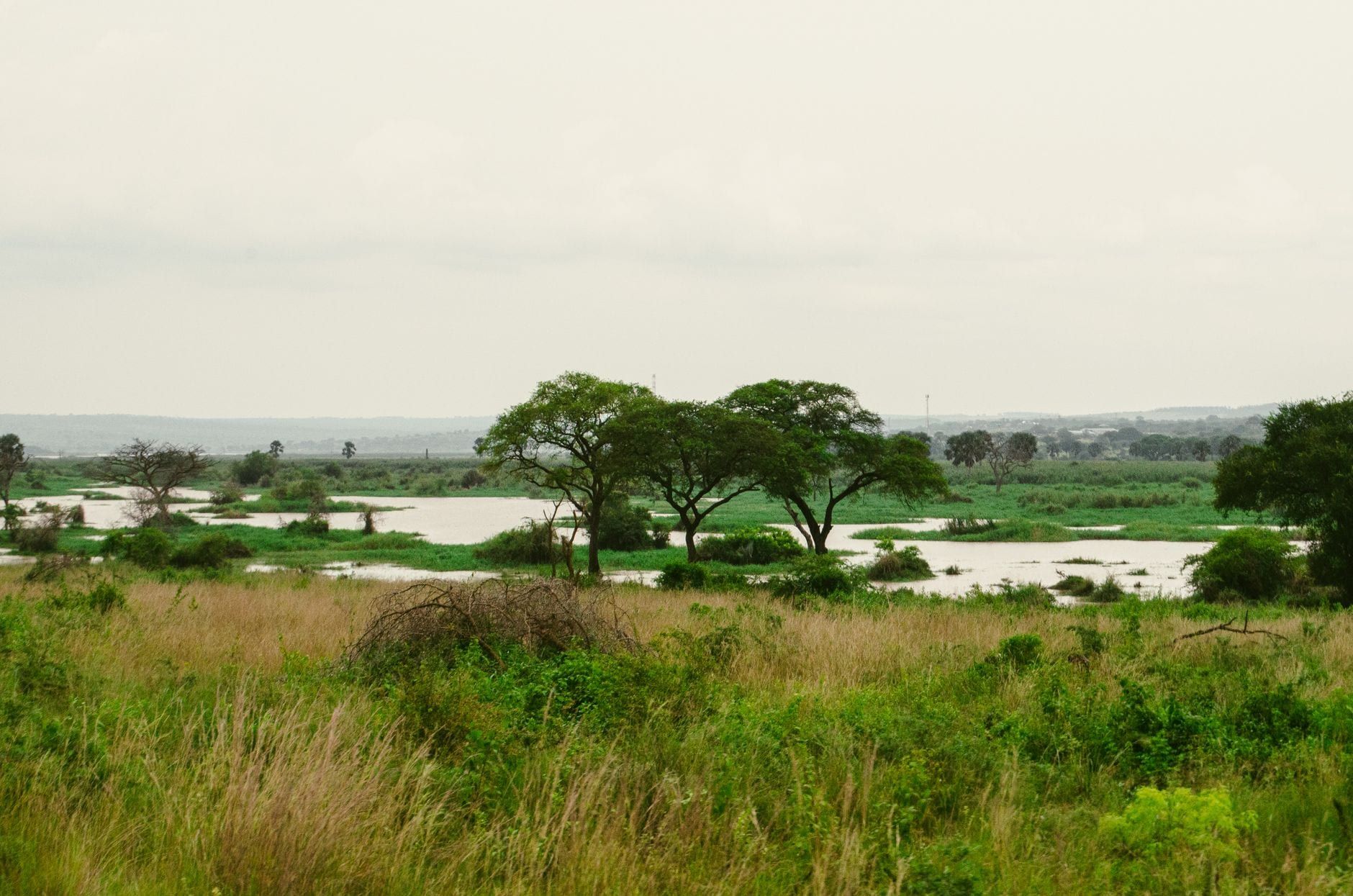
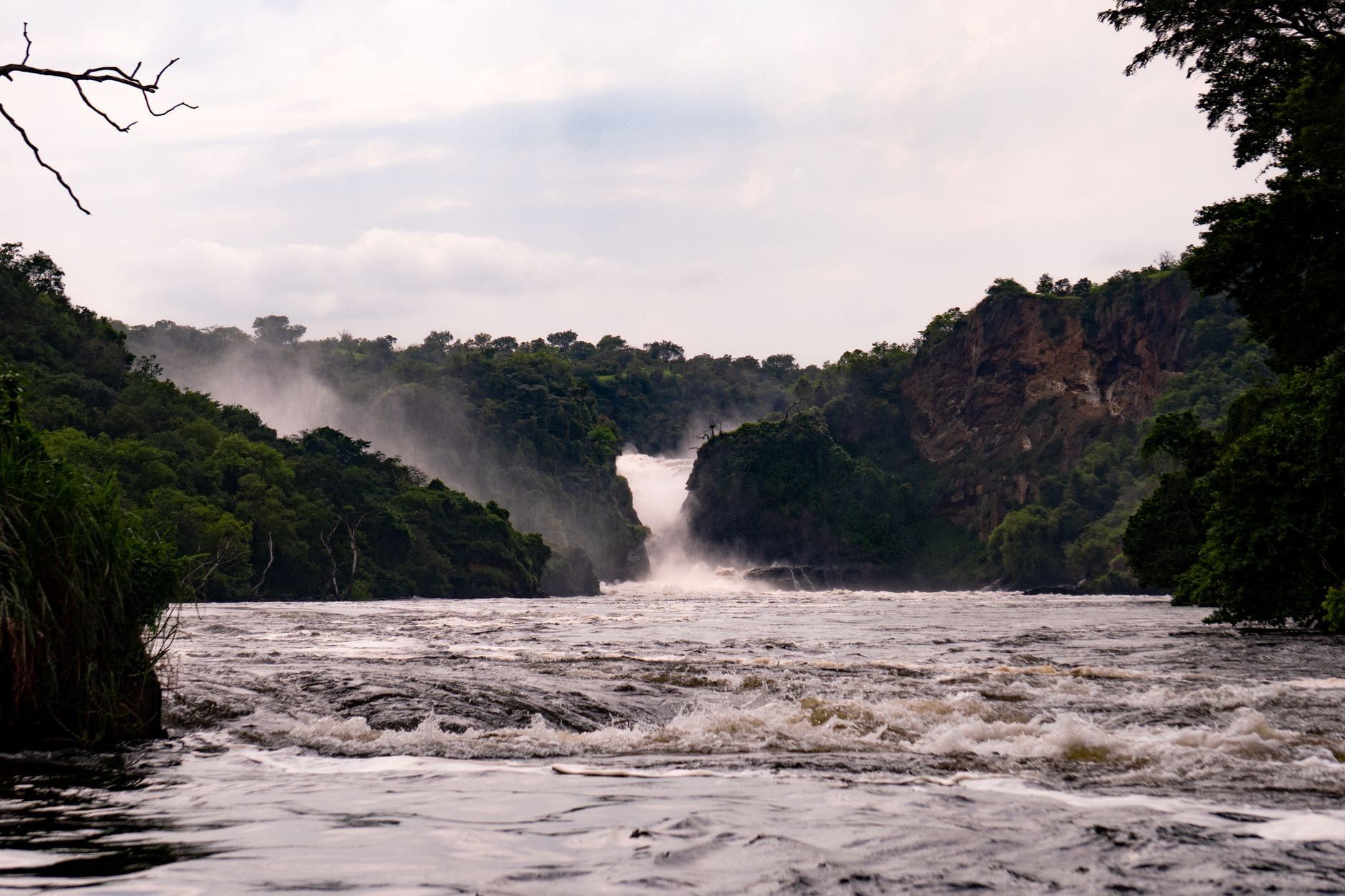
A Murchison Falls safari gives you two safaris in one: open savanna game drives where giraffe and elephant move through Borassus palms, and a boat cruise up the Victoria Nile to the base of a waterfall that squeezes an entire river through an 8-metre gap. The park is Uganda's oldest and largest, protecting 3,840 km² of the Albertine Rift, and you reach it in four to five hours by road from Kampala. Three days is the classic trip — enough for two game drives, the launch cruise and time at the falls themselves.
This guide covers what you'll actually see, what each activity costs at official UWA rates, a day-by-day itinerary, and the trade-offs most brochures skip.
Why Choose a Murchison Falls Safari?
The Victoria Nile crosses this park for 115 km, and at its midpoint the whole river is forced through a gorge barely 8 metres wide before plunging 45 m into a churning pool called the Devil's Cauldron. That single feature — one of the most powerful waterfalls on Earth — is why Murchison works as a safari destination in a way most savanna parks don't: you see the wildlife from a boat as well as a vehicle. Giraffe and buffalo graze the northern plains in the morning; by mid-afternoon you're drifting past hippo pods to a wall of spray under the falls.
The numbers behind the scenery: 3,840 km² of park (Uganda's largest, gazetted as a reserve in 1926 and made a national park in 1952), 144 mammal species, 556 bird species. The park sits at the northern end of the Albertine Rift, where the Bunyoro escarpment drops to palm-dotted plains between 619 m and 1,292 m above sea level. If you want the full backstory — the 1864 Baker expedition that named the falls, the Idi Amin years, the 1951 filming of The African Queen on these waters — our park history and visitor guide covers it.
It suits first-time safari-goers well, because the boat section requires no game-tracking skill — the hippos, crocodiles and drinking elephants are on the banks whether you spot them or not. Families get reduced entry for children aged 5–15 (US$25). Photographers get giraffe herds against escarpment backdrops. And anyone pairing Uganda's savanna with a wider Uganda trip can route Murchison together with chimpanzees in Kibale, Queen Elizabeth National Park, or gorilla trekking in Bwindi — usually by way of the Fort Portal road, about six hours to the south-west.
Now the honest part. There are no rhino inside the park — they were poached out of Uganda's parks decades ago. Tsetse flies bite in parts of the reserve, and their sting genuinely hurts (the sleeping-sickness risk to tourists is very low, but wear the right clothing anyway). The drive from Kampala is long and, in the rains, rough. April, May, October and November turn murram tracks to mud and make the top-of-the-falls rocks treacherous. None of this is disqualifying; it just argues for timing the trip right, which we'll get to.
What Animals You'll See (and How Realistic Your Sightings Are)
Four of the Big Five live here — lion, leopard, elephant, buffalo — and the rhino gap is fixable with a stop at Ziwa on the drive in. But set expectations now: the giraffe, elephant and antelope sightings are near-certain, and the big cats are not. Plan around that and the park over-delivers.
The park's signature animal is the Rothschild's giraffe, one of the rarest giraffe subspecies on Earth. Murchison is its most important stronghold anywhere, and the herds on the northern plains can number dozens. Historically giraffe were confined to the north bank of the Nile, so that's still where to look. Uganda kob gather in their hundreds on the Buligi grasslands, alongside Jackson's hartebeest, oribi, waterbuck and warthog — the kob herds are so dense they're effectively the food supply for the lion prides, which is why the predators stay close to the same tracks you'll drive.
Cats are the least reliable sightings. Lions do much of their hunting at night and spend daytime drives flat and hidden in scrub; leopards are rarer still. Your odds improve sharply on dawn and late-afternoon drives, when lions move between shade and water, and a guide who reads tracks helps more than luck does. Spotted hyena and black-backed jackal turn up more often than either cat.
The river is the sure thing. Hippo pods crowd the Nile near Paraa — the name means "home of the hippo" in Luo — and Nile crocodiles up to 6 metres long bask on the sandbanks, some of the largest you'll see in Africa. Elephants come down to drink in the afternoons, often in breeding herds with calves.
Birders get 556 species, and the star is the shoebill stork. The Albert Nile delta, downstream of Paraa, is one of the most reliable places in Africa to find it, along with Goliath herons and saddle-billed storks in the papyrus. Even non-birders should carry binoculars; the waterbird density on the launch cruise is hard to ignore.
The Three Core Experiences: Game Drives, the Nile Boat Cruise & Top of the Falls
Every Murchison itinerary is built from the same three blocks. Here's how each one works, what it costs at official UWA rates, and how to run it well.
Game drives on the Buligi tracks
The prime game-viewing ground is the Buligi Peninsula, the wedge of grassland north of the Nile between the Victoria Nile and Lake Albert. The Queen's, Albert, Victoria and Buligi tracks near Pakuba Airfield produce most sightings; the quieter Honeymoon Track also rewards. Go at dawn, when lions are still moving, or in the late afternoon — midday drives mostly find sleeping shapes under bushes. Off-road driving is banned and the speed limit is 40 km/h, enforced with on-the-spot fines, so sightings happen from the tracks themselves.
A UWA ranger guide can join your vehicle for about US$25 for a 2–4 hour drive, booked at the gate — worth it if you're self-driving, since they know which bend held lions yesterday. If you're on an organized safari tour, a guide is already in the car.
The launch cruise to the base of the falls
The UWA launch leaves from Paraa and runs upriver for about two hours to Baker Point, directly beneath the falls. It costs US$30 for foreign non-residents (US$25 for foreign residents, UGX 30,000 for East African citizens), carries up to 45 passengers, and departs in the morning window around 8–9 AM and again around 2–3 PM. En route you pass hippo pods, crocodile banks, buffalo coming to drink, and dense waterbird life. The finale is the point: the boat holds station below the Devil's Cauldron, spray drifting, a permanent rainbow in it when the light is right. Private operators also run the cruise at similar prices if you want a smaller boat.
Top of the Falls
From Baker Point, a guided trail climbs about 45 minutes to the top of the falls (US$15 for foreign non-residents) — the best version of this, because you get the waterfall from below and above in one outing. Have your driver meet you on the south-bank road with the vehicle. If you'd rather not hike, you can drive straight to the Top of the Falls viewpoint for US$10. At the top the ground trembles as the entire Nile funnels through the fissure; the rocks are wet and genuinely slippery, so stay behind the marked areas and keep children well back. Late afternoon light is the best time for photographs.
The Albert Delta cruise
The second boat trip runs downstream from Paraa toward the Lake Albert delta, about two hours each way. This is the shoebill trip: papyrus channels, Goliath herons, and a real chance at the bird most people come to Uganda hoping to see. It's the weakest of the three core experiences for big mammals — you're here for the swamp — so take it on a second morning or swap in a third game drive if the cats have eluded you.
Add-Ons That Make the Trip: Chimpanzees, Rhinos, Night Drives & Balloon Flights
Four add-ons can turn the standard three days into a complete Uganda wildlife trip. All of them can be arranged around the core itinerary without adding much driving.
Chimpanzee tracking in Budongo Forest
Budongo Forest's Kaniyo Pabidi block sits on the park's southern boundary near the Kichumbanyobo gate, roughly an hour from Paraa. Permits cost about US$130 per person and must be arranged in advance; tracking takes 2–4 hours through mahogany and ironwood forest, ending with an hour alongside a habituated chimp family. The forest holds more than 600 chimpanzees and some 360 bird species, and success rates are high. Minimum age is 12. This is the natural fourth day of a longer trip, and it stacks cleanly with the delta cruise or a second game drive.
Rhino tracking at Ziwa Sanctuary
Ziwa Rhino Sanctuary sits on the Kampala–Masindi road about 148 km south of the park — directly on your route in. You track white rhinos on foot with armed rangers, often getting within about twenty feet of them. Rhinos were poached to extinction in Uganda's parks; Ziwa is the breeding sanctuary bringing them back, and it's the only way to complete the Big Five on this route. Budget two to three hours for the walk. Most travellers slot it in on day one, breaking the drive.
Night game drives
Night drives are rare in East Africa, and Murchison offers them at US$40 per person with a mandatory UWA guide — but only if you're sleeping inside the park. The payoff is a different animal cast: lions on the move, leopard, civet, and hyena actually working rather than lying up. If your lodge is inside the park boundaries, book the drive through it.
Hot-air balloon flights
A sunrise balloon over the Nile delta and the savanna costs about US$380 per person including a bush breakfast on landing. You fly low over the Buligi grasslands as animals start moving, then land for breakfast before the heat builds. Capacity is limited, so book it ahead through your operator or lodge rather than at the gate.
A Sample 3-Day Murchison Falls Safari Itinerary
Three days is the sweet spot: roughly a half-day's drive in, a full day in the park, and a half-day out. This itinerary works around two park mechanics most first-timers miss — the 24-hour entry ticket and the river crossing at Paraa. Our 3-day Murchison tours follow almost exactly this shape.
Day 1: Kampala to the park, via the rhinos
Leave Kampala or Entebbe by 8 AM. The route runs Luweero–Nakasongola–Masindi to the Kichumbanyobo gate, 305 km all told. Stop at Ziwa for the on-foot rhino track (two to three hours), have lunch, and reach the gate around 2 PM. That timing matters: your entry ticket is valid 24 hours from the moment you stamp in, so a 2 PM entry covers the rest of today plus tomorrow until early afternoon — you effectively get two days of game viewing on one ticket. Spend the late afternoon on a first, easy game drive toward your lodge, and cross the Nile at Paraa. Since a bridge opened in 2021 that's the normal crossing; the old eight-vehicle pontoon ferry now runs only during bridge maintenance.
Day 2: Dawn drive, afternoon cruise, the falls
Be on the Buligi tracks at first light — the Queen's and Albert tracks near Pakuba Airfield — while lions are still hunting and giraffe are feeding in the open. Return by late morning, rest through the heat, then take the 2–3 PM launch cruise up the Nile to Baker Point. If your legs are willing, do the 45-minute Top of the Falls hike and get collected on the south-bank road; the ground-level thunder of the river squeezing through the gorge is the memory you'll keep. Have your driver meet you before the gates close at 7 PM.
Day 3: Delta cruise or second drive, then home
Use your final morning for the Albert Delta cruise if shoebills are on your list, or a second dawn drive if the cats have dodged you. Either way, be rolling south by early afternoon — the drive back to Kampala is four to five hours, and you don't want to be finding a guesthouse in Masindi after dark.
Shorter and longer versions
Short on time? A 2-day dash — drive up with the Ziwa stop, one full park day, drive back — covers the essentials, and our 2-day Murchison tours are built for exactly that. With four or five days, add a Budongo chimp morning and a slower pace, or a night drive from a lodge inside the park. Most travellers find two to four days the right range; one day from Kampala means eight to ten hours of driving for a few hours inside.
What a Murchison Falls Safari Costs
Uganda Wildlife Authority publishes the official tariff, and Murchison's fees are straightforward once you see them itemized. Foreign resident and East African citizen rates run cheaper across the board; the figures below are foreign non-resident rates, the ones most international visitors pay.
| Item | Foreign non-resident rate |
|---|---|
| Adult entry (valid 24 hours) | US$45 |
| Child entry (ages 5–15; under-5s free) | US$25 |
| Launch cruise to the falls | US$30 |
| Top of the Falls hike | US$15 |
| Top of the Falls viewing | US$10 |
| Self game drive (per vehicle) | US$10 |
Vehicle entry is separate: a foreign-registered saloon pays US$40 plus a US$10 park surcharge, and tour-company 4WDs pay US$150 (Ugandan-registered vehicles pay far less). Night drives are US$40 per person, a ranger guide for your own vehicle is about US$25, Budongo chimp permits around US$130, and balloon flights about US$380. Full details are on our hours and fees page. Payment works at the gates via mobile money, card terminals, bank transfer or the UWA online portal — keep every receipt, because rangers verify them.
All-in trip prices follow the accommodation, not the permits. Budget 3-day group tours run roughly $320–680 per person; a private mid-range 4-day safari with Ziwa, two game drives, the cruise and the falls hike averages $1,100–1,600 per person for two travelling together; fly-in luxury trips sit above that. Permits are the same whatever you pay for the bed, so a mid-range trip differs from a budget one almost entirely in where you sleep.
The Best Time to Visit Murchison Falls
Two dry seasons frame the year: June–September and December–February. Both bring thin vegetation, firm murram tracks, and wildlife concentrated along the Nile and around waterholes, which is exactly what you want for both game drives and photography. June–September is the busiest window; December–February is equally productive but hot, with January and February daytime temperatures reaching 29–34°C. Plan midday downtime around the morning and afternoon boat departures.
April, May, October and November are the wettest months. Rain turns tracks to mud, disperses animals into thicker cover, and makes the top-of-the-falls rocks genuinely dangerous underfoot. The compensation: lush scenery, the best birding of the year as migrants arrive, and softer demand for lodges. If you go green-season, book a 4x4 and a flexible schedule.
One date-specific note: lodge and flight availability tightens sharply in both dry windows, so reserve early for those months. And whenever you travel, the falls are at their most dramatic when the river runs high — the spray is bigger, the roar is louder, and you'll feel it through the boat's deck.
Getting There, Getting Around & Where to Stay
The park is 305 km north-west of Kampala; the drive to the Kichumbanyobo gate takes four to five hours on a surfaced road, with Paraa another 85 km beyond Masindi. Scheduled and charter flights from Entebbe reach the park's Pakuba, Chobe or Bugungu airfields in about an hour — Pakuba is the most convenient for the Paraa lodge cluster. Buses to Masindi (about UGX 20,000) plus a hired car for the park leg work for the determined. Our getting-there guide has full routes and transfer prices.
Once inside, the crossing point at Paraa splits the park: savanna game country north of the Nile, forest and the falls approach to the south. Gates are open 7 AM to 7 PM with no exceptions, so time your arrival and departure around those hours.
Organized tour or self-drive?
Self-driving is entirely doable. A 4x4 rental from Entebbe or Kampala runs about $80–150 per day depending on whether you take a pop-top camping setup or a Landcruiser, and you pay the US$10 per-vehicle self-drive fee at the gate. Rules are strict but simple: 40 km/h maximum, stay on designated tracks, no off-roading, and a ranger can join you for about US$25 if you want local eyes. A card or mobile-money payment covers gate fees.
An organized tour makes sense if you're combining parks, travelling solo, or simply don't want a 4x4 on murram after rain. A good one should include the vehicle, fuel, a driver-guide, park entry, the boat cruise and lodging in the quoted price — if entry fees are listed as "extra," ask for the real total before booking.
Where to stay
Most lodges cluster around Paraa on the north side of the river, and tiers are wide: camping at Red Chilli Rest Camp from about $8 a night (doubles around $35), Fort Murchison around $140 per person, Chobe around $180, Paraa Safari Lodge around $290, and Nile Safari Lodge or Baker's Lodge from $350–380 at the top end. Expect the quirks of a remote park — low water pressure, no air conditioning in many rooms, slow or absent WiFi. Our lodges guide compares them properly.
Packing and health
The short list:
- Binoculars or a zoom lens — the boat gets you close, not always close enough
- Neutral khaki or olive clothing; black and dark blue attract tsetse flies
- A warm fleece for cold dawn drives in open vehicles
- Insect repellent with DEET, and malaria prophylaxis
- A power bank — electricity is unreliable inside the park
On health: this is a high-density malaria area, so prophylaxis, repellent and lodge nets all matter. Tsetse bites hurt but pose very low sleeping-sickness risk to tourists. Medical care is far away once you're inside the park — carry a basic first-aid kit and never leave the vehicle near hippos, buffalo or elephants.
Frequently asked questions
How many days do you need for a Murchison Falls safari?
Two to four days suits most travellers. Three is the classic trip — Ziwa on the drive in, a dawn game drive, the launch cruise and the falls — while two days covers the core highlights and four to five adds Budongo chimp tracking and a slower pace.
What animals will I see on a Murchison Falls safari?
Lion, leopard, elephant and buffalo are all present, and giraffe, Uganda kob and Jackson's hartebeest sightings are near-certain, with hippos and crocodiles up to 6 metres on the Nile. Lions and leopards are hit-or-miss — dawn and dusk drives improve your odds. The park holds 144 mammal and 556 bird species.
Is a Murchison Falls safari worth it?
For most people, yes. It combines Uganda's largest park, reliable savannah game viewing, a Nile boat cruise and one of the world's most powerful waterfalls in one stop. The downsides are the four-to-five-hour drive from Kampala and tsetse flies in parts of the park.
How much does a Murchison Falls safari cost?
Park entry is US$45 per adult per 24 hours, the launch cruise US$30, the falls hike US$15 and a night drive US$40; chimp permits run about US$130 and balloon flights about US$380. All-in trips range from roughly $320–680 per person on budget group tours to $1,100–1,600 for a private mid-range safari.
When is the best time for a Murchison Falls safari?
The June–September and December–February dry seasons give the best wildlife concentration and firm tracks. April, May, October and November are wettest — muddier driving, but lush scenery, the year's best birding and lower lodge demand.
Can you see the Big Five at Murchison Falls?
Not inside the park — rhinos were poached out of Uganda's parks. Add Ziwa Rhino Sanctuary on the Kampala route, about 148 km south of the park, where you track white rhinos on foot with rangers and complete all five.
Can you self-drive in Murchison Falls National Park?
Yes. A US$10 per-vehicle self-drive fee applies on top of entry, foreign-registered saloons pay US$40 plus a US$10 surcharge, and you must stay on designated tracks at 40 km/h maximum. The best game viewing is north of the Nile on the Queen's, Albert, Victoria and Buligi tracks.
How do you get to Murchison Falls from Kampala or Entebbe?
It's a 305 km, four-to-five-hour drive via Masindi and the Kichumbanyobo gate, usually broken with a Ziwa rhino stop, crossing the Nile at Paraa by bridge. Scheduled and charter flights from Entebbe reach the park's Pakuba, Chobe or Bugungu airfields in about an hour.